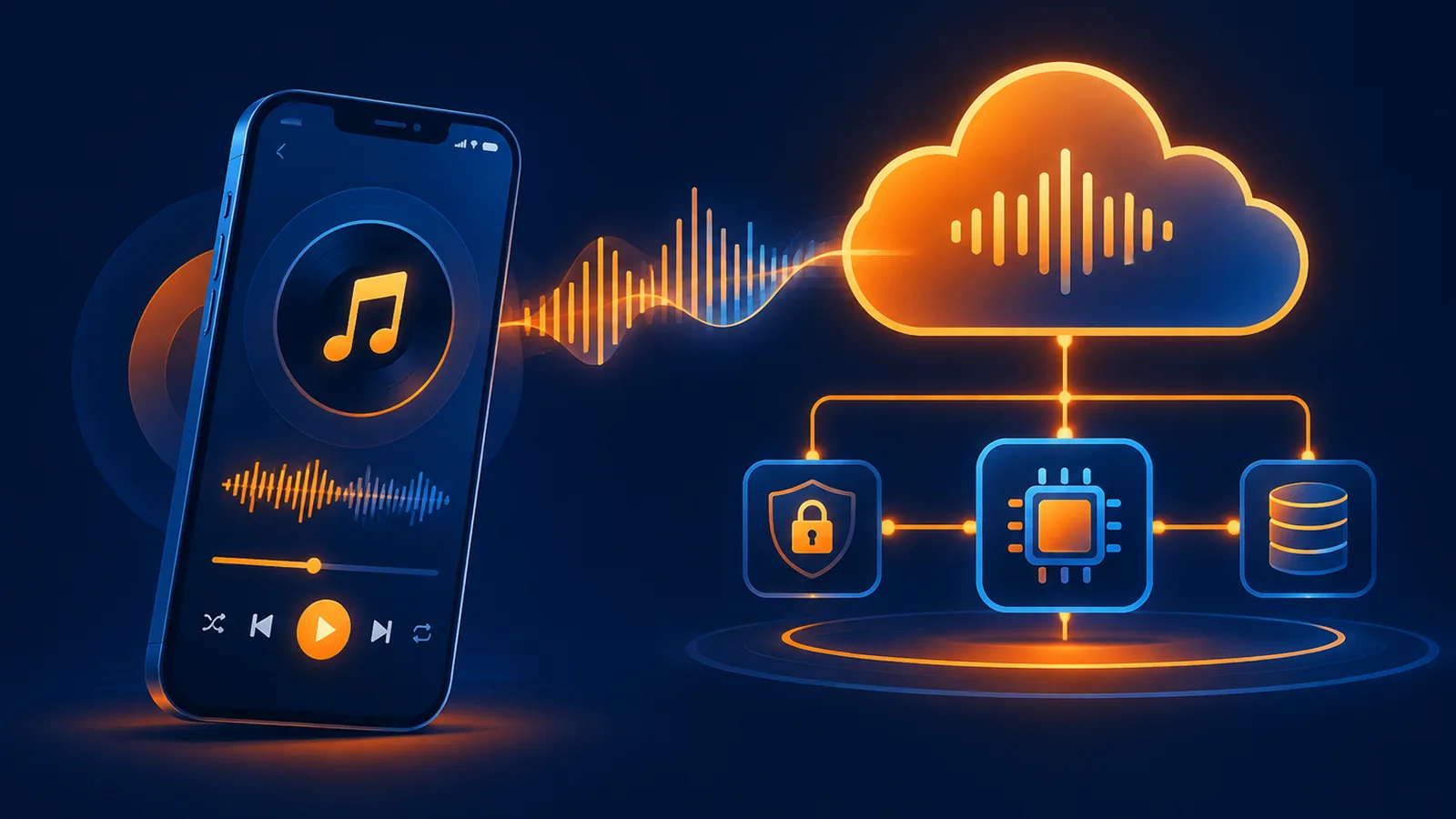

Voice cloning sounds like advanced technology, but the actual barrier to trying it is lower than you might expect: a few dozen seconds of clear vocals plus one identity verification gets you a dedicated timbre you can use to generate songs.
How much source audio you need
| Material | Requirement |
|---|---|
| Length | Anything from a few dozen seconds to a few minutes works; longer is more stable |
| Content | Natural speech, or unaccompanied singing |
| Quality | Quiet environment, no background music, no reverb |
| Format | Any common audio format; keep the file under 10MB |
Longer is not automatically better. Three clean 30-second recordings usually beat one three-minute recording with background noise.
The full process
- Prepare the recording: quiet environment, your phone's built-in recorder is fine, and avoid heavy vocal enhancement or over-aggressive noise reduction.
- Submit the clone: upload the material and the system starts building the timbre.
- Complete secondary verification: this step confirms the voice belongs to you. Just say a few sentences as prompted to finish it.
- Get the timbre: once verification passes, the timbre is ready for generation.
- Generate a song: pick the cloned timbre when generating, enter lyrics and style, and the output song is sung in that voice.
What secondary verification is and why it is required
A voice is personal biometric information, so the platform has to confirm the person operating is the voice's owner; otherwise anyone could clone someone else's voice. Secondary verification is the gate built for that: the system asks you to speak a few sentences live, confirming a real person and matching voice characteristics.
If the manual process feels like a hassle, assisted automatic verification is available at 5 yuan per run. Manual verification itself is free.
Four tips for better clone results
- Don't deliberately change your tone when recording: use your normal speaking pace and pitch so the clone sounds like you.
- Avoid background music: even at low volume it gets learned as part of the timbre.
- Vary the content: reading a string of numbers, a bit of everyday conversation, and a sentence with some ups and downs works better than repeating one line.
- Don't do heavy post-processing: noise reduction and vocal enhancement strip out the personal traits of a voice, making it sound less like the person.
What you can do after cloning
- Generate original songs in your own voice (or a voice you are authorized to use).
- Set your own original lyrics to your own voice.
- Make multilingual versions: the same song sung in different languages with one timbre.
Cost and limits
Manual vocal verification and standard cloning are free, generating a song with a cloned voice costs 1.20 yuan per run, and assisted automatic secondary verification costs 5 yuan per run.
One thing has to be stated clearly: cloning someone else's voice requires their explicit authorization. Cloning and using another person's voice without permission is both an infringement and a violation of platform rules, and the platform provides no authorization for it. Your own voice, or a voice you have written consent for, is the safe scope.
Sample requirements, what creation costs and how the flow works are collected on the AI voice clone page.
¥0.6 per generation, 2 tracks, unlimited downloads
Runs on the Suno V6 engine. Download MP3 or WAV as often as you like. Signing up needs an email address, not a phone number.